
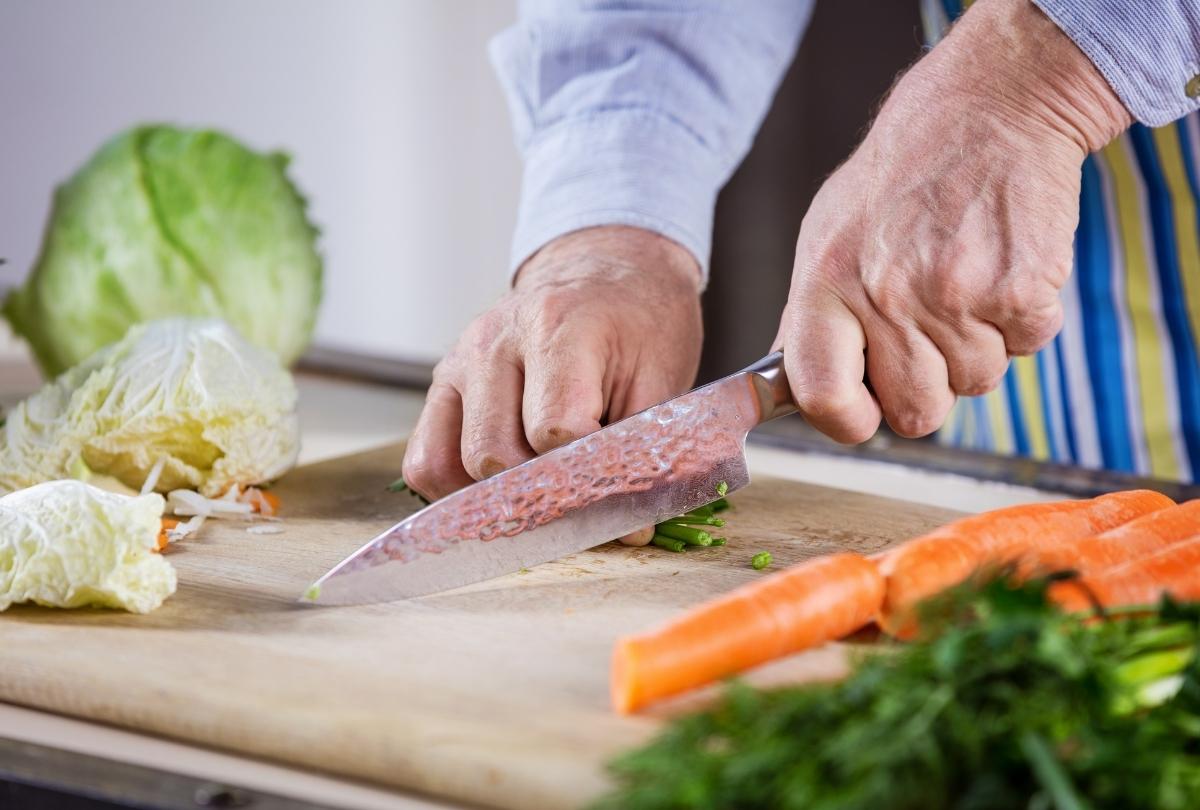
Whether you're a passionate amateur cook who whips up culinary masterpieces on the weekend or a professional chef preparing dozens of dishes daily, your knife is your most important tool. Buying a good knife makes the difference between chopping and slicing, between frustration and smooth precision.
But with so many types of knives on the market, how do you choose the right one? In this blog post, we'll walk you through all the factors you need to consider.
What should you pay attention to when buying a kitchen knife?
1. Blade material
The blade material is one of the most important factors when choosing a knife. It determines not only how sharp the knife can be, but also how long it retains that sharpness, how it feels during use, and how much maintenance it requires. Especially for sous vide users—where precision in cutting is essential—the choice of material can make the difference between perfect results and disappointment. Below, we discuss the four most common materials, along with their advantages and disadvantages.
Stainless steel (stainless steel)
Stainless steel has been the most popular choice for kitchen knives for years, both among amateur chefs and in professional kitchens. It's an alloy of iron, carbon, and chromium, with the chromium providing rust resistance.
- Advantages: rust resistant, easy to maintain, often affordable.
- Disadvantages: does not stay as sharp as carbon steel, requires more frequent sharpening.
Carbon steel
Carbon steel is known for its exceptional sharpness and long blade life. It contains less chromium, making it less rust-resistant, but can be hardened much harder. This makes it a favorite among chefs who prioritize precision above all else.
- Advantages: extremely sharp, stays sharp for a long time, ideal for precision work.
- Disadvantages: sensitive to rust and discolouration, requires immediate drying after use.
Damascus steel
Damascus steel is a layered combination of different steel grades, often with a core of high-carbon steel and outer layers of softer, rust-resistant steel. It is known for its beautiful, wavy patterns and excellent cutting properties.
- Advantages: beautiful layered appearance, combines hardness and flexibility.
- Disadvantages: more expensive, mainly aesthetic added value.
Ceramics
Ceramic knives are made of zirconium dioxide, an extremely hard material that stays sharp much longer than steel. They are lightweight and completely rustproof.
- Advantages: very sharp, lightweight, does not rust.
- Disadvantages: more brittle, more difficult to sharpen yourself.
2. Form and function
The shape of a knife isn't just an aesthetic choice; it largely determines where it performs best. Each type of knife is designed with a specific purpose in mind, and you'll immediately notice this when you use it. The right knife for the right task not only means you'll work faster and more efficiently, but also elevate your final results.
For amateur chefs, one versatile knife like a chef's knife may be sufficient, but professional chefs often use multiple specialized knives to optimally prepare each ingredient. Especially with sous-vide preparations, where consistent cutting thickness is crucial for even cooking, choosing the right type of knife plays a crucial role.
3. Ergonomics and balance
A knife should feel comfortable in your hand, especially if you'll be using it for extended periods. Test the weight and balance: a good knife's balance point is often at the base of the blade, allowing for effortless cutting.
4. Maintenance
- Hand washing is usually mandatory for high-quality knives. Dishwashing damages both the sharpness and the handle.
- Regular sharpening and honing keeps your knife in top condition.
- Store knives safely—for example, on a knife magnet strip—to prevent damage.
Which kitchen knife should you buy?
Chef's knife
The chef's knife is the ultimate all-rounder, suitable for cutting meat , fish , vegetables , and herbs. Its balanced shape and wide blade make it comfortable to use, even during longer cutting sessions. An indispensable knife for both beginners and experienced chefs.
[product=chef's knife]
Available in two sizes, this knife offers excellent balance and a comfortable grip, making preparing food both easy and enjoyable.
[/product]
Advantages:
- Widely applicable
- Comfortable grip
- Strong, durable bladeAvailable in various lengths
Disadvantages:
- Less suitable for very fine precision or very hard products
- Can be heavy for smaller hands
Hatchet
The chopping axe is designed for heavy-duty chopping, such as bone-in meat, hard vegetables, and nuts. The heavy blade provides extra momentum, allowing you to slice through tough ingredients with less effort. Ideal for chefs who often need to divide large pieces, but less suitable for precision work.
[product=axe]
Not only is this chopping axe extremely sharp, it also has a comfortable handle and a perfectly balanced weight, allowing you to effortlessly cut through even the toughest meat or thickest vegetables.
[/product]
Advantages:
- Razor-sharp blade made of durable chrome-molybdenum steel
- Perfect for hard ingredients
- Ergonomic and hygienic handle
- Stays sharp for a long time
Disadvantages:
- Heavy duty for longer sessions
- Less suitable for precision work or soft products
Bread knife
With its long, serrated blade, the bread knife effortlessly cuts through crispy crusts without crushing the bread. It's also perfect for soft, delicate products like tomatoes or pastries. Less versatile, but indispensable in any kitchen where bread is served regularly.
[product=bread knife]
This bread knife is equipped with a sharp serrated blade, ideal for cutting all types of bread without crushing it.
[/product]
Advantages:
- Serrated edge cuts effortlessly through hard crusts without tearing
- Versatile for bread, tomatoes and delicate cakes
- Stays sharp longer due to serrations
Disadvantages:
- Less suitable for universal cutting tasks
- More difficult to sharpen yourself
Slicing knife
The carving knife is ideal for cutting thin, even slices of meat, poultry, and fish. Its long, narrow blade preserves the texture and juices of the product, which is especially important for sous vide cooking. Not intended for hard vegetables or chopping.
[product=carving knife]
This slicing knife from the Kitchen Line collection offers exceptional sharpness and balance for a precise cut. Designed for both amateur and professional chefs, this knife ensures an effortless and precise slicing experience.
[/product]
Advantages:
- Ideal for thin, even slices
- Minimizes moisture loss in meat (perfect for sous vide)
- Very precise
Disadvantages:
- Not suitable for hard vegetables or bones.
- Requires good cutting technique
Paring knife
This small, maneuverable knife is perfect for precision work like peeling, pitting, and garnishing. The short blade allows you to work accurately and with control, even with small ingredients. A paring knife is ideal for detailed work, but less suitable for larger cutting tasks.
[product=paring knife]
This paring knife from the Kitchen Line series is the perfect solution for any home chef. It combines a razor-sharp finish with a comfortable grip, making prep work in the kitchen effortless and efficient.
[/product]
Advantages:
- Perfect for small fruits and vegetables
- Light and easy to handle
- Precise and controlled
Disadvantages:
- Limited to small tasks
- Not suitable for large pieces
Japanese Nakiri Knife
The nakiri is a traditional Japanese vegetable knife with a straight edge. It cuts vegetables without bruising them and is ideal for quick, vertical slicing motions. Less suitable for meat or hard products, but unsurpassed for vegetable preparations.
[product=japanese-nakiri-knife]
The Hendi Japanese Nakiri knife offers exactly what you need. With its straight edge and no point, this square, thin, and wide knife is ideal for cutting vegetables into wafer-thin slices.
[/product]
Advantages:
- Cuts vegetables without bruising
- Straight cut ideal for fast, straight cutting movements
- Light and sharp
Disadvantages:
- Not suitable for meat or bone
- Less versatile than a chef's knife
Wiegemes
The rocking knife has a curved blade that allows you to chop vegetables and herbs while rocking. This cutting technique is efficient and safe, as your fingers remain out of reach of the blade. Not multifunctional, but extremely handy for large quantities.
[product=wiegemes]
Whether you're a professional chef or someone who simply loves to cook, the Hendi rocking knife is an essential tool in your kitchen arsenal. Enjoy efficiency, durability, and convenience, all in one stylish knife.
[/product]
Advantages:
- Quickly chops large quantities of herbs or vegetables
- Ergonomic cutting movement
- Safer for fingers
Disadvantages:
- Not multifunctional
- More difficult to store
Gyuto knife
The gyuto is the Japanese equivalent of a chef's knife, with a sharp, lightweight blade for both precision and strength. Suitable for meat, fish, and vegetables, it's a favorite among chefs seeking versatility. It does require maintenance to maintain optimal sharpness.
[product=gyuto-mes-kotai]
The Gyuto is the Japanese equivalent of a chef's knife, handy and balanced for an ideal grip, capable of cutting everything except bones and frozen food.
[/product]
Advantages:
- Very versatile
- Exceptionally sharp
- Balance between European and Japanese style
Disadvantages:
- Required maintenance
- Higher price
Maintenance tips for a long knife life
A good knife is an investment in cooking pleasure, precision, and safety. With proper maintenance, a quality knife can last for years, sometimes even decades. Whether you're an amateur cook who uses your chef's knife daily or a professional chef working with a complete set of specialized knives, proper maintenance ensures your knives always stay sharp, hygienic, and reliable.
Below you will find the most important maintenance tips, including the reasons why they are essential.
1. Hand wash – Avoid the dishwasher, dry immediately
While it might be tempting to put your knives in the dishwasher after use, this is detrimental to their lifespan. The high temperatures, harsh detergents, and collisions with other objects can damage the blade and corrode the handle.
Method: Wash your knife immediately after use with warm water and a mild dish soap, and dry it immediately with a soft cloth.
2. Sharpen regularly – Don't wait until the knife is blunt
A dull knife is not only frustrating but also dangerous: you have to apply more force, increasing the risk of slipping. Many chefs wait too long before sharpening, meaning the blade ultimately requires more work to become sharp again.
Approach: Sharpen your knife regularly with a sharpening steel or knife sharpener to keep the edge straight, and have it sharpened periodically with a whetstone or by a professional.
[product=knife sharpener]
The Hendi Knife Sharpener ensures your knives are always sharp and ready for use. With its ergonomic design, versatile functions, and non-slip base, this sharpener is perfect for everyday use, both in professional kitchens and at home.
[/product]
3. Proper Storage – Protect Your Knife
Loose knives in a drawer can quickly become blunt from contact with other objects and also pose a safety risk. Proper storage is therefore essential.
Options:
- Knife block – Handy, protects blade and fingers.
- Knife magnet – Space-saving, knives remain visible and immediately accessible.
- Protective covers (sheaths) – Ideal for loose storage or transport.
[product=knife magnet]
Transform your kitchen into an efficient and stylish workspace with the Hendi knife magnet. A convenient and safe way to store your knives and other kitchen tools without compromising style or functionality.
[/product]
[product=roll-up-messentas-kotai]
Take your culinary tools anywhere with the KOTAI Roll-Up Knife Bag, crafted from durable waxed canvas and full-grain leather, designed for the professional chef on the go.
[/product]
4. Cutting board – Choose wood or plastic
The surface you're cutting on has a major impact on how long your knife stays sharp. Hard materials like glass, marble, or stone may look beautiful, but they dull your knife quickly.
Method: Use a wooden or plastic cutting board . Wood is gentle on the blade and has natural antibacterial properties, while plastic is easy to clean.
cutting board set
The high-quality rubberwood not only guarantees a long lifespan, but the light checkered pattern contributes to a visual aesthetic that is both modern and timeless.
[/product]
[product=set-of-6-haccp-cutting-boards-with-rack]
This set of 6 HACCP cutting boards with rack is the perfect solution for any kitchen that prioritizes efficiency and hygiene.
[/product]
Extra tip: Invest in maintenance accessories like a good sharpening stone, a honing steel , and a quality cutting board. These relatively small expenses will significantly extend the life of your knives and ensure you always achieve the best results in the kitchen.
[product=sharpening steel-kotai]
KOTAI's high-quality sharpening steel is made of stainless steel and black pakkawood. It takes very hard steel to sharpen a steel knife. The KOTAI HRC 65 sharpening steel can sharpen even the hardest steel alloys in just a few strokes.
[/product]
Ready to buy a good chef's knife?
Buying a good knife isn't a luxury; it's an investment in cooking enjoyment, safety, and quality. For sous-vide users, precision is crucial—and that starts with the right tools. By paying attention to material, balance, function, and maintenance, you'll choose a knife that will last for years. Browse the full range at Souvy and experience the difference between casual slicing and real cooking.

Leave a comment
This site is protected by hCaptcha and the hCaptcha Privacy Policy and Terms of Service apply.