

The sous vide cooking technique has been used in the hospitality industry for some time, primarily by (Michelin-starred) chefs. One of the main reasons it's now also being adopted by amateur chefs is the drop in price of sous vide equipment . It's now affordable and readily available. Therefore, in this blog post, we'll take a closer look at the biggest advantages of sous vide cooking. We'll also compare the cooking technique with traditional cooking methods.
Traditional cooking methods
Traditional cooking methods involve cooking food in an oven or a pan. Heating the pan using gas, an induction hob, or a ceramic hob makes no difference. Traditional cooking involves cooking food using a heat source that heats the pan. The food is then heated by the pan. When using an oven, the air surrounding the food is heated. The pan or the air is much hotter than we'd like. In fact, far too hot; if the food sits too long, it burns.
Traditional cooking techniques include the following techniques:
- Baking or searing
- Steaming
- Simmer
- Stewing
- Roasting
- To stew
- Boiling or blanching
- Preserve
- Poaching
- Stir-fry
[product=ebook-sous-vide-times-temperatures]
Wondering how long your dish actually needs? With this sous vide e-book, you’ll always have the right answer at your fingertips.
[/product]
Preparation temperature
The temperature used in traditional cooking methods is often too high. This makes it difficult to determine when a product is perfectly cooked, as it cooks very quickly at a high temperature. If you remove it from the pan or oven too early, the product is still raw, but if you remove it too late, it is overcooked. Traditional cooking methods involve cooking chicken breasts in the oven at, for example, 200°C (400°F) for twenty minutes. However, this temperature is far too high. Chicken is already cooked at a minimum temperature of around 60°C (140°F). In the oven, the chicken breast is therefore cooked at a temperature more than three times higher.
Prepare to core temperature
Sous vide cooking is the perfect solution. With sous vide cooking, the food is cooked using the heat transferred through the water. Because you can adjust the temperature very precisely, the food is cooked exactly to your liking.
Want your steak rare? 51 degrees Celsius. Prefer medium-rare? 61 degrees Celsius. Still want it well done? 67 degrees Celsius.
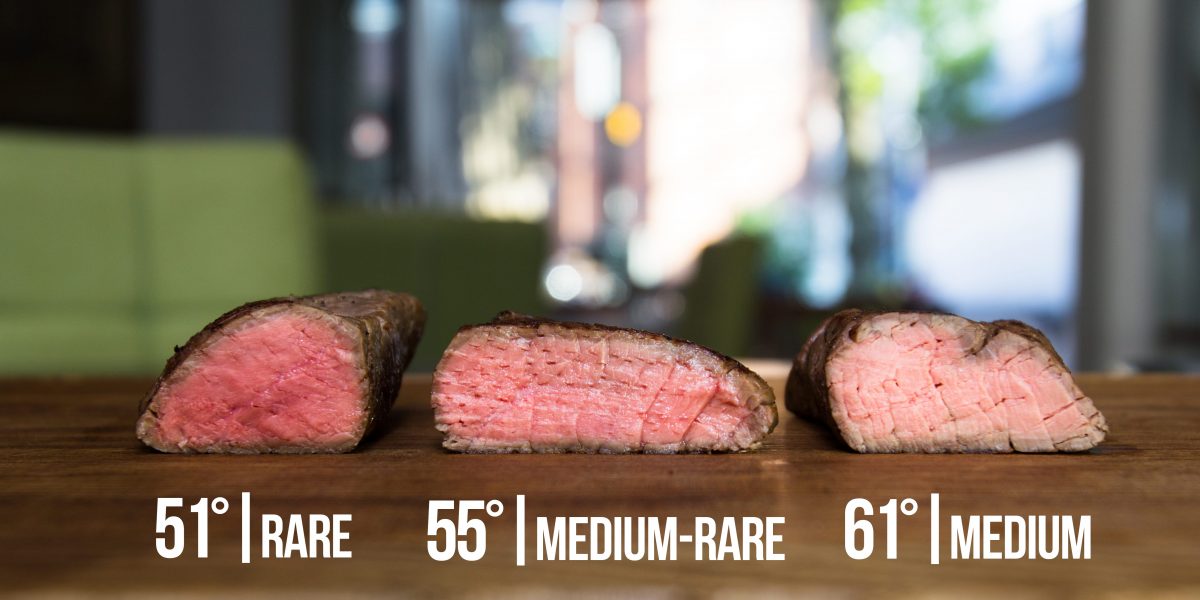
Time is less important here. A specific time is chosen depending on the thickness, as the heat must have enough time to reach the core of the product and break down the proteins. After the minimum cooking time has elapsed, the food can remain in the water bath until the rest of the dish is ready. Even then, you'll still have a perfect cooking time.
[product=ebook-sous-vide-recipe-collection]
This e-book is your complete guide to mastering sous vide. From perfectly cooked steak and buttery-soft lobster to tender vegetables and refined restaurant-style dishes, every recipe delivers consistent, high-end results at home
[/product]
The 8 Biggest Benefits of Sous Vide
Constant result
With sous vide, the temperature is constant, so your food is cooked to exactly the temperature you want every time.
You determine the outcome yourself
The temperature can be set to the nearest degree, allowing you to determine exactly how you want your food cooked.
Prepare larger quantities at once
Want to cook six steaks at once? Sous vide cooking makes that easy. And with a larger container , you can easily cook for 20 people at once!
Tastier food
Thanks to sous vide cooking, your food becomes more flavorful. Meat stays incredibly tender. Fish stays juicy. Vegetables retain their delicious crunch.
Healthier
Because the products are sealed airtight, nutrients and vitamins are preserved. This makes for a healthier diet.
Simple
Truly anyone can cook sous vide, from home cooks to chefs. Some culinary knowledge is a plus, but certainly not a must.
Effortless
Just season or marinate, then wrap and let it cook. While your product is cooking sous vide, you don't have to worry about it. Easy, right?
Culinary
Serve the most flavorful dishes. Products that are normally difficult to cook (asparagus, saddle of hare, etc.) are now transformed into culinary masterpieces.
Because the temperature never rises above a certain level, the proteins in the product can't be converted further, and the food doesn't cook any further. In short: sous vide cooking is easy, requires less effort, and produces better results!


5 comments
melanie.w@ziggo.nl
Ik heb zalm gegaard op 52 graden in de sousvide en direct geserveerd maar de gasten vinden de zalm niet warm genoeg om te eten. De zalm is lauw in vergelijking tot de andere producten op het bord die heet zijn. Logisch want de zalm is maar 52 graden. Je kunt de zalm dus nooit heter serveren zonder dat de structuur verandert?
jorick@souvy.nl
Hi Nicolette, dat kan zeker. Ik heb hieronder beschreven hoe je dat precies moet doen.
Regenereren
Het regenereren ofwel het opnieuw verwarmen van sous vide gegaarde producten kan op verschillende manieren. Hieronder zijn 2 van die manieren uitgelicht:
1. Zet het sous vide apparaat aan en verwarm de vacuümverpakte producten in de sous vide bak op een temperatuur van /- 50 graden. Het product is van tevoren al sous vide bereid en dient enkel nog opgewarmd te worden, waardoor deze lage temperatuur volstaat. Het is afhankelijk van het product hoe lang het dient te regenereren. Het voordeel van sous vide is in dit geval dat het product nooit overgaar wordt in verband met de constant lage temperatuur. Je kunt uiteraard ook de exacte temperatuur nemen waarop het product gegaard is gebruiken.
2. Verwarm de oven voor op 120 graden. Haal de producten uit de vacuümverpakking en leg ze in de voorverwarmde oven. Het is van belang dat de oven niet te warm wordt om te voorkomen dat de producten te ver doorgaren. Het voordeel van de oven is dat het product snel opgewarmd is, maar het nadeel blijft dat het product sneller overgaar wordt.
nicolette62@gmai.com
kan ik bv lamsbout van tevoren sous-vide garen en dan op de dag zelf weer verwarmen tot juiste kerntemperatuur?
koen@souvy.nl
Hi Paul,
Wat vervelend om te horen dat het niet helemaal goed gegaan is met het sous vide bereiden van de goulash. Ondanks dat onze sous vide zakken extra stevig zijn wil het soms gebeuren dat er een scheurtje in de zak ontstaat. Om het drijven van de zakken tegen te gaan zou je er aan kunnen denken om de zak te verzwaren middels een lepel o.i.d. in de zak. De knijpers kunnen inderdaad gebruikt worden om lucht te laten ontsnappen en te voorkomen dat er water in de sous vide zak komt als deze niet goed en volledig gesloten is.
Het is mogelijk om knijpers te gebruiken op de sous vide bak, echter betekend dit wel dat je de deksel er af zal moeten halen, waardoor je het water minder efficiënt verwarmt. Om het gebruik van knijpers tegen te gaan is het ook nog mogelijk om het vlees vacuüm te verpakken. Dit zou ik bijvoorbeeld aanraden als je van plan bent om 24 uur spareribs te garen.
Mocht je nog andere vragen hebben dan hoor ik het graag!
paul_stoop@yahoo.co.uk
Bij het garen van mijn laatste portie goulashvlees bleek er een klein scheurtje in de zak te zitten. Het water in de bak werd helemaal bruin — niet ideaal voor de hygiëne. Ik vermoed dat het scheutje is ontstaan toen ik de zak uit het 64 graden C warme water tilde om een luchtbel te laten ontsnappen. Het gebeurt wel eens dat zakken gaan drijven als er gassen uit het vlees vrijkomen. En bij een drijvende zak wordt de inhoud niet meer van alle kanten verwarmd…
Op de site van Anova zag ik dat men de zak met een knijper aan de rand van een pan vastmaakte. Wellicht is dat een goede manier om de lucht vanzelf te laten ontsnappen? Zou dat ook werken bij een souvy bak?
Leave a comment
This site is protected by hCaptcha and the hCaptcha Privacy Policy and Terms of Service apply.