
If you want to make meat or fish more tender, you can marinate it. You can also simply do this in salt water! Brining makes dry chicken breasts a thing of the past.
What is brining?
Brining is an age-old technique for preserving food. There was a time when refrigerators and freezers weren't available. Brining allowed slaughtered meat to be eaten even during the winter months. These days, we rarely use brining to extend the shelf life of food. Brining is now primarily used for flavor and to tenderize meat.
Brining food is anything but complicated. You don't need any special kitchen tools. You probably already have the necessary ingredients at home. Brining involves marinating the meat or fish in water to which a certain amount of salt has been added.
What can you pickle?
Pickling has been used for hundreds of years to prevent food from spoiling quickly or to enhance its flavor. The technique of brining is therefore deeply ingrained in Dutch cuisine. Chances are you already regularly eat brined food.
Well-known examples of pickled foods include Dutch New Herring, which is pickled in saltwater. Salmon and mackerel are also always brined before cold smoking . Freshly pressed cheese is also placed in brine when making cheese. Virtually anything can be brined.
Wet or dry brining
There are several ways to brine. Depending on the desired result, you can choose a wet brine or a dry brine. Brining is very popular in America, and the two brining methods have different terms there. Brining is similar to our wet brine. Preserving in salt, our dry brine, is known as curing.
A dried ham or a dried fish such as stockfish or cod is pickled in salt. This results in a high salt concentration, meaning these products have a longer shelf life. A cooked ham that is brined therefore has a lower salt concentration and therefore a shorter shelf life than a dry-brined product.
Dry brine
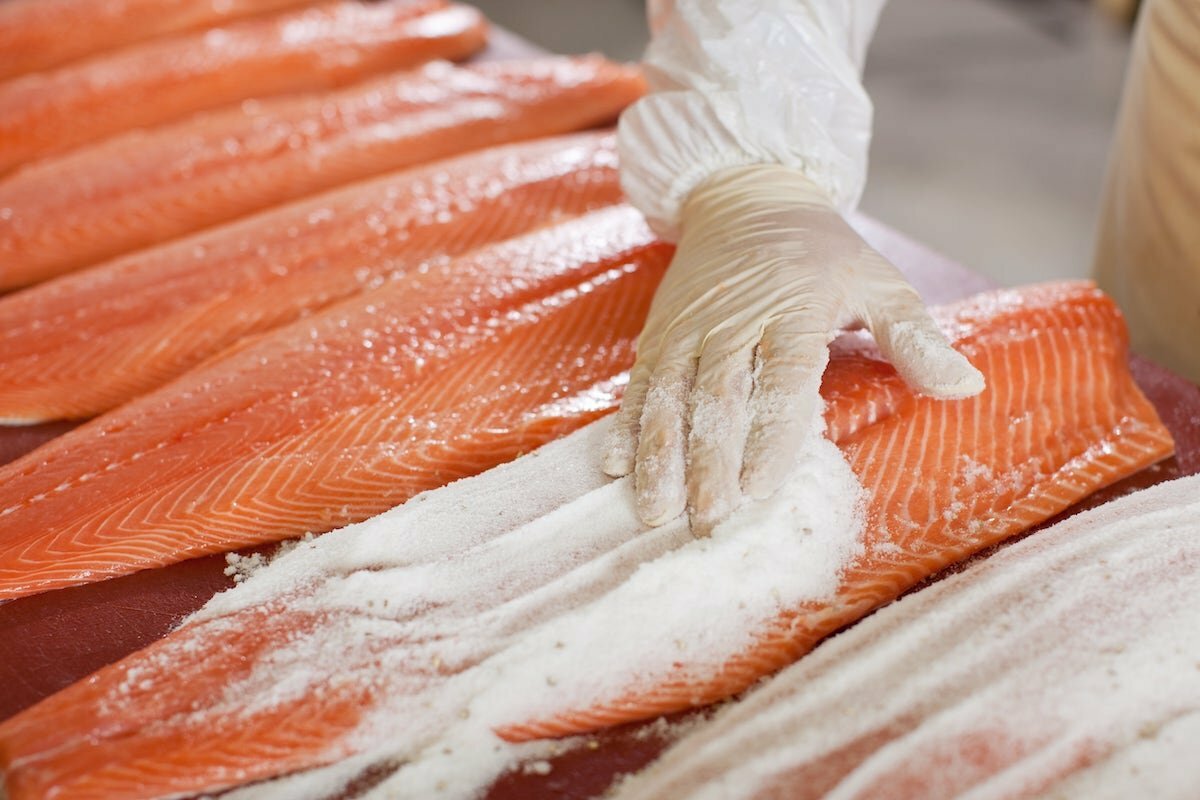
Dry brining uses only salt, no water. By rubbing salt onto a product and then allowing it to soak in, the salt draws moisture from the meat. Weight is often used to apply additional pressure to the product. Sometimes, additional herbs and spices are used, as in the case of Gravad Lax – Norwegian cured salmon.
The result of dry brining is different from the wet version. The salt concentration at the surface of the product will exceed six percent. Consequently, the salt will draw moisture from the meat, extending its shelf life, but it will also alter the product's texture.
Wet brine
A wet brine uses significantly less salt. Most people find the taste of wet brine to be flavorful and much less salty than dry-brined food.
Because less salt is used in a wet brine, the product will actually absorb water. The salt will dissolve in the water and concentrate on the surface of the muscle cells. The ions repel each other, like two negative magnetic poles, creating space within the muscle cells. This causes the meat to absorb water and increase in weight. Read more about the chemical process of brining here.
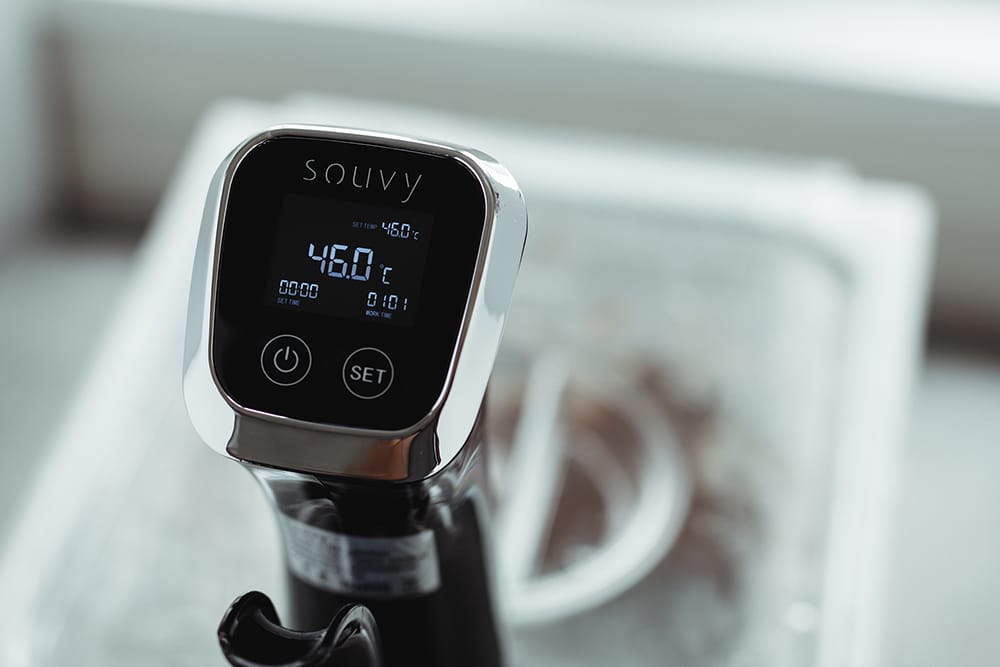
The increased water content of meat is one of the biggest advantages of brining. Meat always loses moisture during cooking, so overcooking will make it dry and tough. Brining meat retains more moisture. Brining, like sous vide, will result in more tender meat . The added salt also makes the meat more flavorful.
How to brine meat
The recipe for wet-brining meat is quite short. And actually quite simple. To brine, you need nothing more than water and salt. You can also add additional flavorings to the water, such as bay leaves, freshly chopped chilies, ginger, honey, soy sauce, or simply sugar. All these aromatics add extra flavor to the meat.
Add sugar
Besides flavor, there's another reason for using sugar in brining. The sugar doesn't affect the meat's texture, but it does promote better browning. The sugar added during brining and the proteins in the meat are a good combination for a beautiful Maillard reaction.
What type of salt for brining?
In principle, you can use any type of salt for pickling. Sea salt is always a good choice, but other types, such as regular table salt or the more expensive Fleur de Sel, can also be used.

How much salt do you need?
The amount of salt you need when wet-brining meat or fish depends on the total weight of the product and the water. A salt concentration of about 10% is common. Do not use more water than necessary to cover the product. Add the weight of the meat and the water together. Take one-hundredth of that amount as salt and dissolve it in the water.
Basic recipe for curing meat
This recipe is a good starting point for curing meat. You can also add other seasonings, which you can vary to your liking, such as thyme, garlic, juniper berries, cinnamon, ginger, or lemon zest.
The ingredients
- 0.5 liter boiling water
- Bay leaves, about 5
- 100 grams of salt (for example sea salt)
- 1 tablespoon cloves
- 1 tablespoon peppercorns
- 50 grams of sugar
Step-by-step plan
Step 1
First, determine how much brine you need. Place the meat in a bowl or container and add enough water to cover the meat. Remove the meat from the container and measure the amount of water. This is the amount of brine you need to make.
Step 2
We use between 50 and 75 grams of salt per liter of water.
Step 3
Bring half a liter of water to a boil and dissolve the required amount of salt and sugar in it. You can also use other seasonings. The sugar will help brown the meat better later when cooking. Once the salt and sugar have dissolved, you can add the rest of the water.
Step 4
Place the meat in the cooled brine and cover with foil. Place the container in the refrigerator. Marinate for 2 hours per 500 grams of meat.
Step 5
Once the meat has marinated long enough, remove it from the brine. Pat it dry with a paper towel. Large pieces of meat or poultry are best left uncovered to dry for a few hours. This ensures a crispier crust when baking or roasting.


7 comments
Linda Zantingh
De uitleg over het nat pekelen is duidelijk. Ikzelf wil eigenlijk pekelen om te conserveren. Wat me nog niet duidelijk is, is hóe (kan het verpakt bijvoorbeeld) en hoe lang ik het gepekelde vlees daarna kan bewaren.
rene.vroemen@gmail.com
Rosie
Kun je ook biefstukjes van 200 gr. Voor op de BBQ pekele?
yu-givan@hotmail.com
Hi Mirjam,
Het handigste is om even te kijken hoeveel water je nodig hebt om de kipfilet onder te laten staan. Dan vervolgens 50 tot 75 gram zout per liter water toevoegen. Een mooie verhouding zout/suiker is voor elke gram zout, een halve gram suiker. Maar hier kun je ook mee experimenteren.
mirjamkuhlmann@xs4all.nl
Dit nat pekelen is me nog niet duidelijk.
Wat zijn bijvoorbeeld de verhoudingen zout en ook suiker als ik bijvoorbeeld ca 300 gram kipfilet wil pekelen? En hoe lang moet deze precies in de koelkast staan?
mirjamkuhlmann@xs4all.nl
Dit nat pekelen kan ik niet volgen.
Is er een voorbeeld met bijvoorbeeld 300 gram kipfilet en dan de verhoudingen zout en ook suiker te geven? Of beter nog uitleg via een video?
Leave a comment
This site is protected by hCaptcha and the hCaptcha Privacy Policy and Terms of Service apply.