
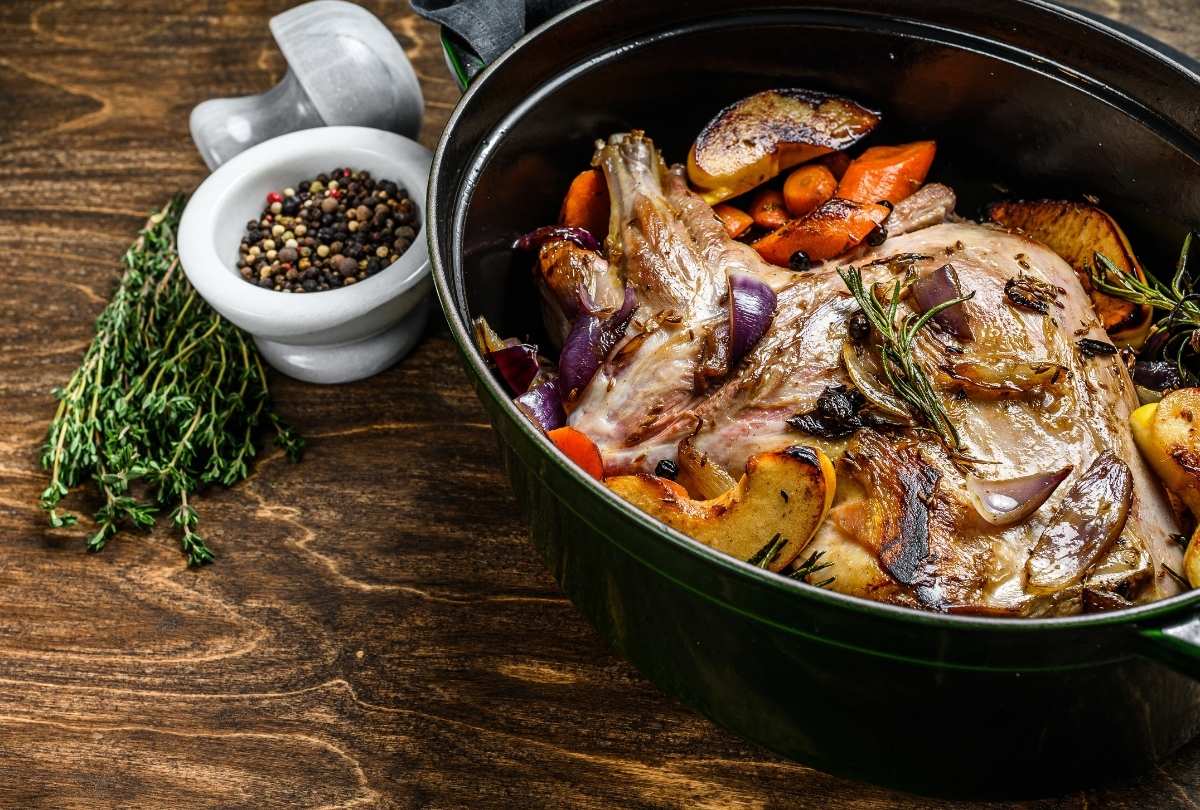
Your kitchen fills with the rich aroma of gently simmering stew. You lift the lid, and the warm, spicy steam feels like a hug on a cold day. On the other end of the culinary spectrum, you might hear about sous vide , a modern cooking technique that cooks food in a water bath at a precise temperature. Simmering in a Dutch oven and sous vide are two completely different techniques, and both produce deliciously tender and flavorful food. In this blog post, we'll delve into both methods, comparing them in a fun and understandable way so you can decide which one best suits your cooking style.
Simmering in a frying pan
Simmering is a traditional technique in which a dish is simmered for a long time over low heat in a cast-iron skillet , for example. You first brown the meat or vegetables briefly, add some stock, wine, or herbs, and then leave the pan covered over a low heat for several hours.
Because the temperature remains below boiling, even a tough steak eventually becomes buttery-soft and practically falling apart. The flavors slowly develop, and the sauce thickens into a rich gravy. Your whole house will smell wonderful – a truly warm blanket on a cold day. Simmering takes time, and you'll need to check occasionally to make sure there's enough liquid. You don't want your beautiful stew to burn or dry out – that would be a shame. But if you take your time, your patience will be rewarded with comfort food full of deep flavor.
Sous vide
Sous vide is a modern technique where you vacuum-seal food in a bag and cook it at a low, precise temperature in a water bath using a sous vide appliance. For example, you set a temperature of 54°C (130°F) for a steak, and the meat then sits in the warm water for a period of time until it's perfectly medium-rare from edge to center.
Because the temperature remains perfectly constant, food cooks evenly, and juices and flavors are locked inside the bag. A piece of meat emerges tender and juicy, and vegetables retain their texture and color. Sous vide gives you incredible control: your dish never gets hotter than the set temperature, so overcooking is impossible. You'll never have to worry about an overcooked, dry steak again. Plus, you're hands-free while cooking—the appliance does the work for you.
You do need some patience; sous vide, like simmering, takes hours and requires specialized equipment . For a delicious brown crust on meat, you'll need to quickly sear it after the water bath. This extra preparation and wait time are worth it, as you'll be rewarded with a perfectly cooked result that's hard to match any other method. Also read our blog post: What is sous vide cooking ?
Slow cooking, preserving flavours
In terms of taste, you'll notice the difference: simmering results in a rich, deep flavor because the liquid reduces and the meat is seared first (this Maillard reaction adds a savory depth). This creates a concentrated sauce full of umami. Sous vide, on the other hand, retains a purer flavor. All the natural juices and aromas remain in the vacuum bag ; nothing is lost to evaporation. Herbs in the bag add subtle flavor, but the dish primarily tastes like itself—in the best sense of the word.
The texture also differs. Braised meat becomes so tender it falls apart (like shredded meat you can pull apart with a fork). Vegetables become velvety soft. Sous vide gives you tenderness without everything falling apart. Meat retains a firmer texture, even when cooked perfectly and juicy. A steak cooked sous vide, for example, is evenly pink and tender throughout, yet compact enough to cut into neat slices without falling apart.
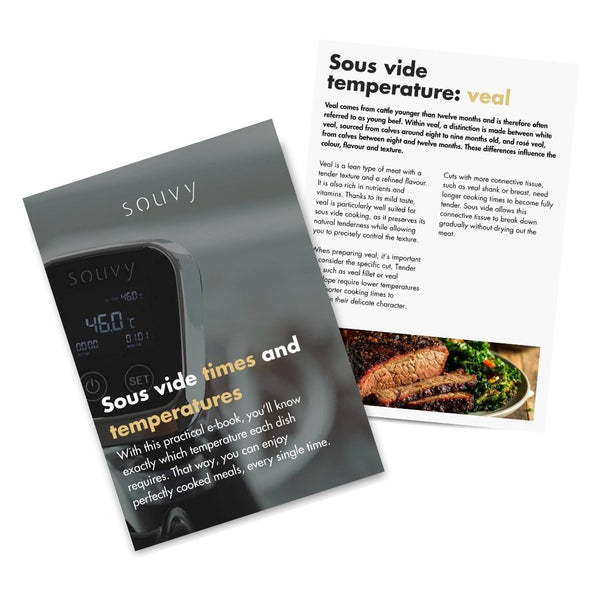
Wondering how long your dish actually needs? With this sous vide e-book, you’ll always have the right answer at your fingertips.
Op voorraad
For which dishes?
- Simmering : Perfect for stews and other comfort foods with rich sauces. Think beef stew, beef bourguignon , or classic pulled pork – dishes that simmer for hours for maximum flavor.
- Sous vide : Ideal for precisely cooked meat, fish, and even vegetables. Think of a steak that needs to be perfectly medium-rare, a salmon fillet that stays juicy, or perfectly soft-cooked eggs (like an onsen egg).
Simmering or sous vide?
There's no absolute winner when comparing simmering and sous vide—both methods have their own unique charm. The most important thing is that you enjoy cooking and enjoy a delicious result on your plate. Craving a traditional, heartwarming dish that will make your house smell wonderful? Then simmering is the method for you. Want ultimate control and consistency? Then sous vide offers the perfect solution. Feel free to experiment with both and discover how this blend of tradition and technology can make your kitchen adventure even more enjoyable!

Samen koken we slimmer
Ontvang 5% korting op je eerste bestelling

Leave a comment
This site is protected by hCaptcha and the hCaptcha Privacy Policy and Terms of Service apply.