
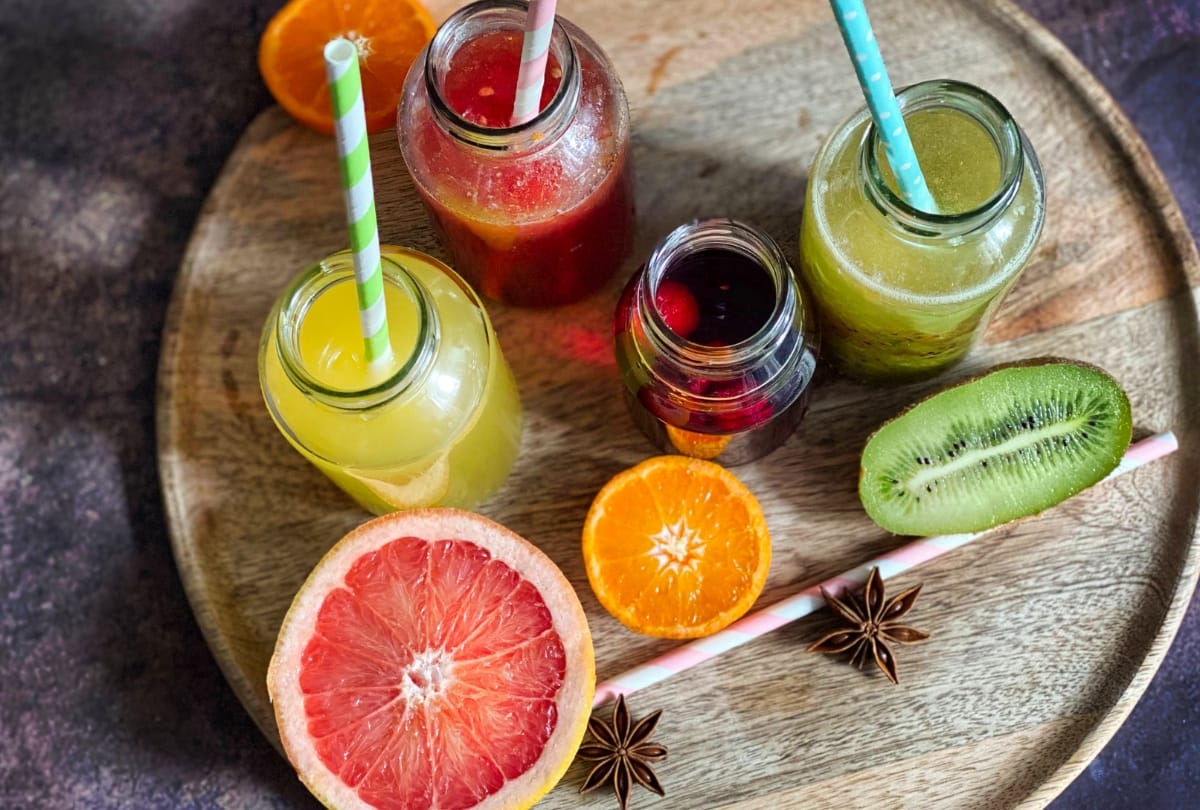
Fresh juices are delicious and a great way to provide your body with nutrients. If you're looking for a way to make your own juice, you can choose between a slow juicer and a centrifugal juicer. Both machines perform the same function: extracting juice from fruits and vegetables. However, there are some key differences between the two. We'll explain!
How does a slow juicer work?
Let's start with the slow juicer. A slow juicer extracts juice from ingredients with very little heat. This preserves the ingredients' vital nutrients and enzymes. A slow juicer also processes leafy greens and herbs. The juice extracted by the slow juicer can also be stored longer without loss of quality. Slow juicers are often a bit more expensive than centrifugal juicers.

How does a juicer work?
A centrifugal juicer works by spinning the juice from the ingredients at high speed. This process generates more heat and can cause some vital nutrients to be lost. However, centrifugal juicers are less expensive than slow juicers and produce more juice in a shorter time.

Differences between slow juicers and juicers
While both machines have their advantages and disadvantages, there are some key differences between them. One of the most important differences is the speed of the juicing process. Slow juicers extract juice slowly, while centrifugal juicers do this much faster. This means a slow juicer takes longer to extract the juice, but the resulting juice is of higher quality. The quality of the juice also varies. Slow juicers produce higher-quality juice because less heat and air are introduced to the juice, which helps preserve the enzymes and nutrients. Centrifugal juicers, on the other hand, produce more juice in a shorter time, but the resulting juice is less nutrient-rich. Slow juicers are better suited for leafy greens and herbs, while centrifugal juicers work better for harder fruits and vegetables.
Cleaning
Finally, there are differences in ease of use and cleaning. Slow juicers are generally more difficult to clean than centrifugal juicers due to their smaller parts and the fact that more pulp remains. Centrifugal juicers, on the other hand, are much easier to clean. When looking for a machine that suits your needs and budget, it's important to consider which factors are most important to you. If you prioritize juice quality and are willing to invest a little more time and money, a slow juicer is probably the best choice for you. However, if you're looking for a cheaper and faster option, a centrifugal juicer might be more suitable.
A healthy lifestyle
Regardless of which machine you choose, making fresh juice is a great way to provide your body with the nutrients it needs. Drinking fresh juice can help boost your immune system, promote digestion, and detoxify your body. However, it's important to remember that homemade juices are not meant to replace full meals. It's recommended to drink them as part of a balanced diet, along with other healthy foods.
Tips for making fresh juices
A fun tip for making fresh juices is to experiment with different flavors and textures of ingredients. For example, try a mix of carrot, apple, and ginger for a spicy kick, or a combination of spinach, cucumber, and lemon for a refreshing flavor. Once you've chosen a machine and start making your own juices, you'll find it's a fun and creative way to stay healthy and enjoy delicious fresh juices. Treat yourself to a freshly made juice as a reward for your hard work, for example!

Whether you choose a slow juicer or a centrifugal juicer, making fresh juice is a great way to provide your body with vital nutrients and improve your health. Experiment with different ingredients and enjoy the process of creating your own healthy drinks. Cheers to a healthy and happy life!


Leave a comment
This site is protected by hCaptcha and the hCaptcha Privacy Policy and Terms of Service apply.