
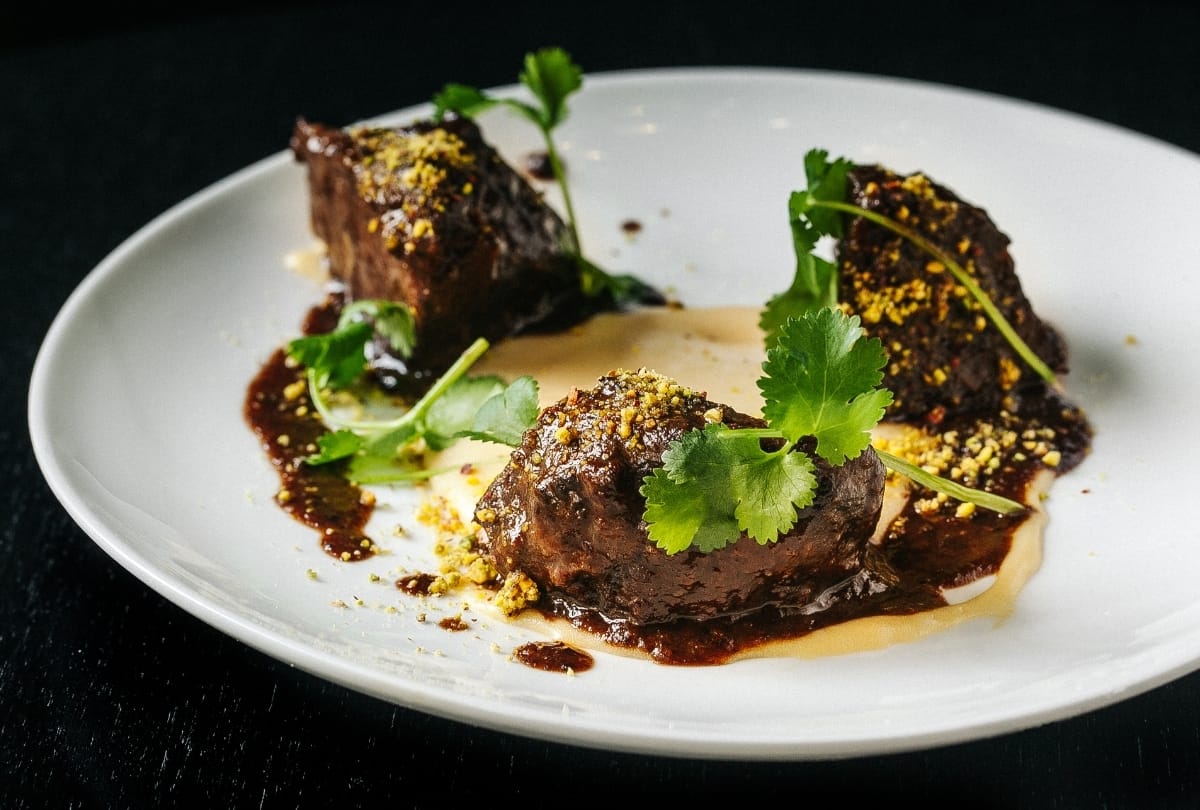
If you're looking for a special dish to impress your guests, veal cheek is definitely a must-try. This blog post will tell you everything you need to know about veal cheek, from its origins and nutritional values to various preparation methods and delicious recipes. We'll also give you helpful tips for cooking with veal cheek and suggestions for serving this flavorful meat. Read on and be inspired by the versatility of veal cheek!
What is veal cheek?
Veal cheek is a cut of meat that comes from the jawbone of a calf. It's a tender and flavorful meat that lends itself perfectly to slow cooking methods, such as stewing and roasting. Because the chewing muscles are intensively engaged during chewing, veal cheek is rich in flavor and contains a high amount of gelatin. This gives the meat a wonderfully tender and juicy texture.
Veal cheek is often used in traditional dishes, such as the French "joue de veau." This dish has a long history and has been prized for centuries for its unique flavor and texture. Over the years, however, veal cheek has also found its way into modern gastronomy, where it is increasingly used by top chefs and aficionados of special dishes.
The origin of veal cheek
Veal cheek originates in French cuisine, where it is known as "joue de veau." Long considered a less popular and inexpensive cut of meat, veal cheek has found its way into modern gastronomy in recent years. It is increasingly used by top chefs and enthusiasts of unique dishes.
In the Netherlands, veal cheek is also becoming increasingly popular. More and more restaurants and butchers are offering this flavorful cut of meat, making it increasingly accessible to the general public. Veal cheek is also becoming increasingly popular in Dutch home cooking, where it is prized for its unique flavor and versatility in various dishes.
Nutritional value and health benefits of veal cheek
Veal cheek is not only delicious but also nutritious. The meat is a good source of protein and also contains important minerals like iron and zinc. Moreover, veal cheek is naturally low in fat, making it a healthy choice for a varied diet.
Besides its nutritional value, veal cheek also offers several health benefits. The high gelatin content in veal cheek can contribute to healthy skin, hair, and nails. Furthermore, veal cheek contains collagen, which can help maintain healthy joints and improve digestion.
It's important to prepare veal cheek correctly to fully enjoy its flavor and nutritional value. The meat should be braised or roasted slowly, until it becomes tender and soft. This allows the flavors to fully develop and preserves the nutrients.
Preparation methods for veal cheek
There are several ways to prepare veal cheek, depending on your taste and preferences. Below, we discuss both traditional preparation methods and modern cooking techniques.
Traditionally, veal cheek is often braised in red wine. Slowly cooking the meat in a flavorful sauce intensifies the flavors and makes it wonderfully tender. You can also roast veal cheek in the oven or on the grill for a crispy crust and a juicy interior.
Another traditional preparation method is marinating veal cheek. The meat is marinated for a while in a mixture of herbs, oil, and vinegar, allowing the flavors to fully develop. The meat is then slowly cooked in the marinade, developing a delicious flavor.
You can also use veal cheek in stews and ragouts. Slowly simmering the meat in a rich broth with vegetables and herbs makes it buttery-tender and develops a delicious flavor.
Cooking techniques for veal cheek
If you're looking for a modern twist, you can prepare veal cheek sous vide. This means you slowly cook the meat in a water bath at a constant low temperature. This allows the meat to optimally retain its flavor and texture. Don't have sous vide equipment yet? Then our complete Sous Vide package is perfect for you!
Another modern cooking technique for veal cheek is using a slow cooker. This method involves cooking the meat slowly at a low temperature for an extended period. This ensures the meat becomes wonderfully tender and allows all the flavors to fully develop.
You can also prepare veal cheek on the barbecue. Slowly cooking the meat over smoldering charcoal or lava rocks gives it a delicious smoky flavor. You can marinate the meat with herbs and spices of your choice for extra flavor. Looking for handy BBQ accessories? Shop them here .
You can also use veal cheek in Asian dishes, such as a spicy curry or a flavorful stir-fry. The meat absorbs the flavors of the sauce and becomes wonderfully tender and juicy.
Delicious recipes with veal cheek
To help you get started preparing veal cheek, we're happy to share two delicious recipes with you. Try them yourself and enjoy the rich flavors and textures of this special cut of meat.
Veal cheek stewed in red wine
Ingredients
- 500 grams of veal cheek
- 1 bottle of red wine
- 2 onions, chopped
- 3 cloves of garlic, finely chopped
- 2 carrots, cut into pieces
- 2 sprigs of thyme
- 2 bay leaves
- Salt and pepper to taste
Preparation method
- Heat a dash of oil in a frying pan and fry the veal cheek on both sides until golden brown.
- Add the onion and garlic and fry briefly.
- Pour in the red wine, along with the carrots, thyme, and bay leaves. Bring to a boil.
- Then let the veal cheek stew over low heat for at least 3 hours, until the meat is deliciously tender.
- Season the dish with salt and pepper.
- Serve the veal cheek stewed in red wine with mashed potatoes and steamed vegetables.
Veal cheek is a delicious cut of meat that lends itself perfectly to slow cooking. Braising the meat in red wine gives it a deep and full flavor. The red wine imparts a wonderful aroma and makes the meat wonderfully tender. Combined with the carrots, thyme, and bay leaves, this creates a flavorful dish that pairs perfectly with mashed potatoes and steamed vegetables. Slowly braising the veal cheek makes it buttery-soft and easily flaked. A true taste sensation!
Veal cheek with vegetables from the oven
Ingredients
- 500 grams of veal cheek
- 2 red onions, sliced
- 2 carrots, sliced
- 1 parsnip, diced
- 2 cloves garlic, finely chopped
- 4 sprigs of rosemary
- Olive oil
- Salt and pepper to taste
Preparation method
- Preheat the oven to 180 degrees Celsius.
- Sprinkle the veal cheek with salt and pepper.
- Heat a dash of olive oil in a frying pan and fry the veal cheek on both sides until golden brown.
- Place the veal cheek in an oven dish and add the red onions, carrots, parsnips, garlic and rosemary.
- Sprinkle the whole thing with olive oil and season with salt and pepper.
- Place the baking dish in the preheated oven and let it cook for about 2.5 hours.
- Serve the veal cheek with oven-baked vegetables and mashed potatoes or fried potatoes.
Veal cheek is also excellent for oven cooking. Slow cooking develops a delicious flavor and makes it wonderfully tender. Combined with the red onions, carrots, parsnips, garlic, and rosemary, this creates a flavorful dish that pairs perfectly with mashed potatoes or roast potatoes. The vegetables become wonderfully tender and absorb the flavors of the meat and herbs. A feast to savor!
Tips for cooking with veal cheek
Want to try your hand at veal cheeks? Below, we'll give you some helpful tips to ensure your dish is a success.
How do you choose the best veal cheek?
When buying veal cheek, pay attention to the color and texture of the meat. The meat should be a nice pink color and have a firm texture. It's also important to choose veal cheek from a high-quality butcher or supplier to ensure the best quality.
Common mistakes when preparing veal cheek
There are several common mistakes to avoid when preparing veal cheek. First, it's important to give the meat enough time to cook. Veal cheek benefits from slow, long cooking to become deliciously tender. Furthermore, it's important to season and season the meat well to ensure all the flavors are fully developed.
Serving veal cheek
To complete your veal cheek dish, we'll give you some suggestions for side dishes and drinks that pair well with this flavorful meat.
Wine and side dish suggestions
Veal cheek pairs perfectly with a robust red wine, such as a Bordeaux or a Côtes du Rhône. You can also choose side dishes like mashed potatoes, steamed vegetables, Duchesse potatoes, or grilled polenta. Feel free to experiment with different flavors to find the perfect pairing!
Presentation tips for an attractive board
Appearance matters too! Present your veal cheek dish on a beautiful plate and pay attention to the plating. For example, place some steamed vegetables next to the meat and garnish with a sprig of fresh herbs. This will make your dish not only delicious but also visually appealing. Use our handy plating kit to turn it into a true work of art!
With the recipes, tips, and suggestions in this article, you're ready to get started with veal cheek. Prepare to be amazed by the flavor and texture of this unique cut of meat and enjoy a delicious meal. Enjoy!


Leave a comment
This site is protected by hCaptcha and the hCaptcha Privacy Policy and Terms of Service apply.