
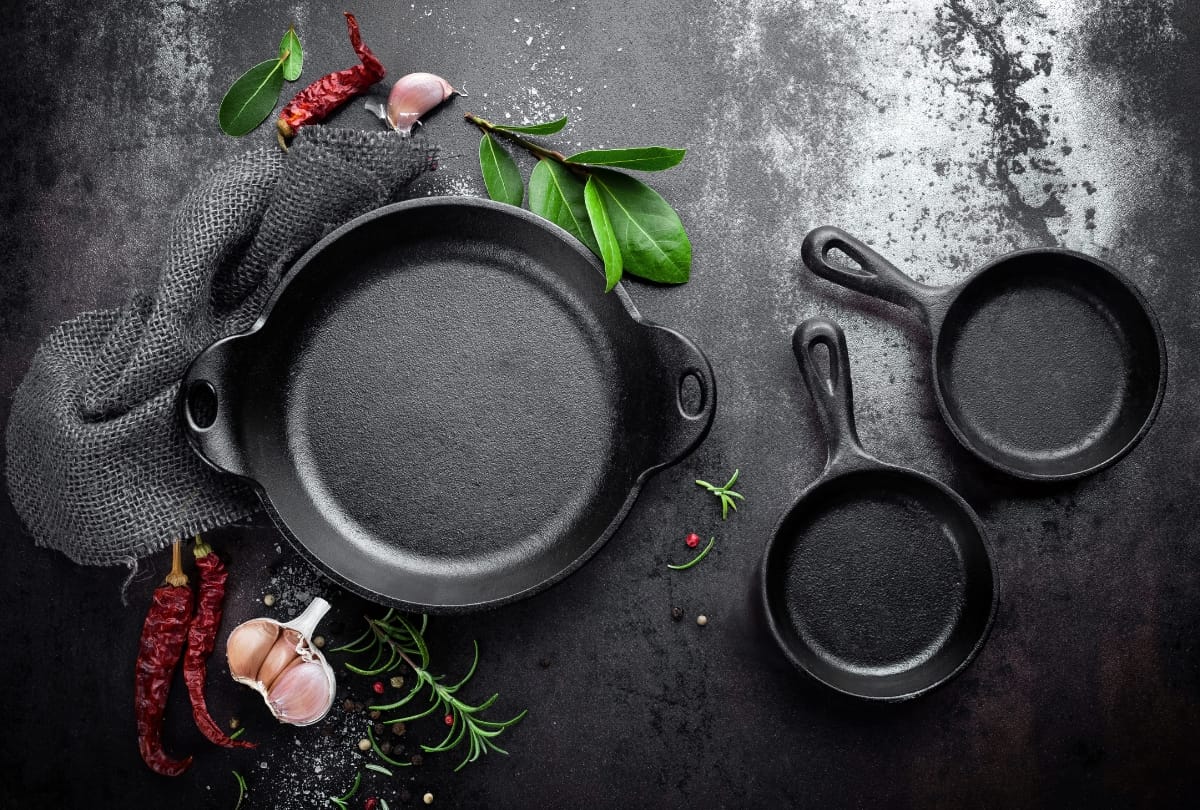
Imagine a cold, rainy evening. You come home after a long day at work and long for a meal that warms you from the inside out. You've decided to make your favorite stew, the kind your grandmother used to make. It has the rich, deep flavors that only cast iron cookware can achieve. But now you're wondering: can cast iron be used on induction?
The benefits of induction cooking
Induction cooking is revolutionizing the world of cooking. You might have heard of it, or even have one installed in your kitchen. It offers precision, speed, and safety. The cooktop stays cool because it heats the pan directly, not the cooktop itself. This means faster cooking and fewer risks. Ideal! Especially if you have a household with children running around. But what does this mean for your beloved cast iron pan ?
[product=cast iron skillet]
The Cast Iron Skillet retains heat excellently, distributes it evenly and forms a natural non-stick coating after seasoning.
[/product]
Cast iron: a faithful kitchen partner
Cast iron is known for its ability to evenly distribute and retain heat. It's durable, and with proper care, it can even be passed down from generation to generation. Perfect for slow-cooking and dishes that require a slow, steady heat. Whether you want to make a stew, a crispy bread crust, or a perfectly grilled steak, you rely on cast iron. But does it work on induction?
[product=enamelled-cast-iron-frying-pan]
The Hendi enamelled cast iron Dutch oven is an investment in quality, durability and culinary freedom.
[/product]
The answer: yes, cast iron works on induction!
Good news for every cook who loves working with cast iron! Cast iron is fully compatible with induction. Because induction cooktops use magnetic fields to heat the pan, cast iron is perfect for this. Cast iron is a ferromagnetic material, meaning it can be magnetized. This allows it to heat quickly and evenly on the induction cooktop.
Tips for using cast iron effectively on induction
While cast iron works great on induction, there are a few things to keep in mind to get the most out of your cooking experience:
- Check the base: Make sure the bottom of the pan is flat. A flat base ensures better and even heat distribution on an induction hob.
- Avoid sliding: Cast iron pans are heavy. To prevent scratches, don't slide them across the induction hob. Always lift them up when moving them.
- Preheating: Because cast iron heats evenly, it may take longer for the entire pan to heat up. Start at a lower temperature and increase it gradually to prevent the pan from heating up too quickly and burning the food.
- Discover the possibilities: Enjoy the benefits of both! Induction for fast heating and the consistency of cast iron for even cooking. This can result in perfectly sealed steaks or slowly simmering sauces without burning.
- Maintenance is essential: Keep your cast iron pan well-oiled and clean. This prevents rust and ensures the pan performs at its best time after time.
Benefits of cooking with cast iron on induction
By using cast iron on induction, you get the best of both worlds: the modern technology of induction and the traditional heat distribution of cast iron. Imagine combining the controlled speed and efficiency of induction with the durable properties of cast iron. Your kitchen will never be the same!
Cast iron on induction
So, if you've been wondering whether to put away your precious cast iron pan since switching to induction , don't worry. Cast iron works fantastically on an induction cooktop!
With proper care and a few tips, you can enjoy the benefits of both. Whether you're a seasoned cook or just starting your culinary journey, cast iron on induction offers the versatility and reliability every kitchen needs. Don your apron, pull out that cast iron pan, and unleash your creativity with delicious dishes. Enjoy!

Leave a comment
This site is protected by hCaptcha and the hCaptcha Privacy Policy and Terms of Service apply.