
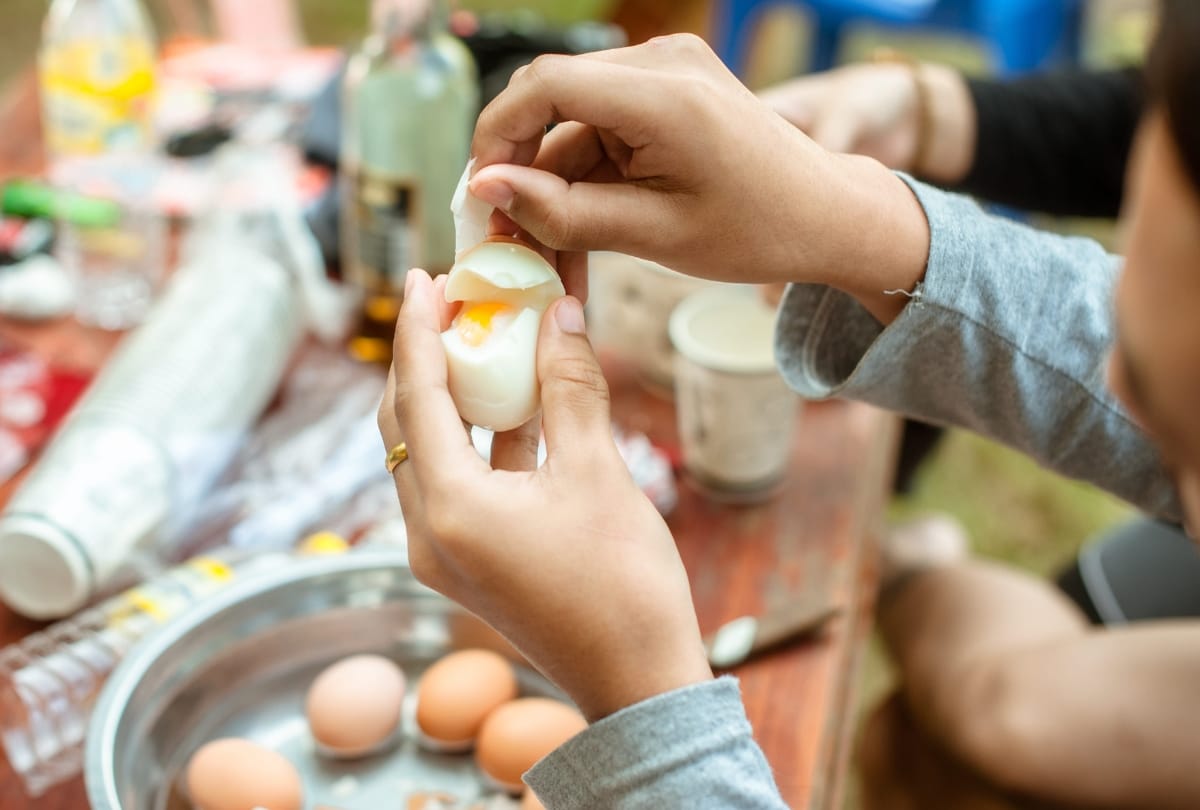
You know the feeling. You're in a hurry and want to quickly boil a few eggs for breakfast or lunch. You put your eggs on the stovetop, but when you cut open the first egg, it either falls apart because it's too soft, or it's so hard the yolk is almost powdery. Boiled eggs may be among the simplest of dishes, but they can be surprisingly tricky to get just right. Don't worry, I'm going to help you solve this riddle once and for all. Whether you prefer a hard- or soft-boiled egg, with a little attention, you can make it perfect.
Why Perfectly Boiled Eggs Often Fail
Eggs seem simple, yet every detail matters in their preparation. The freshness of the eggs, their size, even the altitude you're at can make a difference in the cooking process. Remember that frustration when you thought they were just right, only to be disappointed by a yolk that was too runny or too hard? We're going to prevent that now by zooming in on every little detail.
Freshness and size
It all starts with the eggs themselves. Fresh eggs are essential for good results. Because fresh eggs have a thicker egg white that holds together better during cooking, it's crucial to pay attention to this. Furthermore, the size of your egg affects how long you need to cook it. A large egg needs a few extra minutes in the boiling water. A simple dip in water will quickly tell you if your egg is fresh; if it floats, it's better to choose a different one.
The basics: water and time
Now we get to the heart of the matter: water and time. Fill a pot with enough water to completely cover the eggs. Bring the water to a boil before adding the eggs. Once the water is boiling, gently slide the eggs into the pot with a spoon. This will prevent them from cracking. Set the timer depending on how you like your eggs.
Dreaming of a deliciously runny egg with a richly creamy yolk? Then allow six minutes for a perfectly soft yolk. However, if you prefer a yolk that's just firm enough but still retains some of its softness, choose eight minutes. If you prefer a fully cooked, firm egg with a grainy yolk, be patient and wait twelve minutes.
A handy overview
Let's summarize it again clearly:
- Soft-boiled egg: 6 minutes
- Medium to hard-boiled: 8 minutes
- Fully hard-boiled: 12 minutes
Tip : Use a kitchen timer or a timer on your phone. A minute longer or shorter can make all the difference between a perfect egg and a less-than-perfect one.
A cold bath works wonders
Have you checked the time for your eggs and achieved the perfect cooking time? Then improve their quality by immediately placing them in a bowl of ice water. Why? By abruptly cooling the eggs, you immediately stop the cooking process. You don't want your eggs to continue cooking once they've been removed from the heat. A cold bath also makes peeling easier, which is good for both the eyes and the taste.
Personal preference
Everyone has their own preference. Some people swear by adding a dash of vinegar to the cooking water because it supposedly helps keep the eggshell intact. Others say that poking a small hole at the bottom of the wide end of the egg prevents cracking. Maybe worth a try?
Now that you've read the tips, you know that perfectly cooked eggs are no longer a lottery. With the right timing and a few small steps, you can always prepare eggs to your liking. Whether you enjoy an egg sandwich with a deliciously runny yolk or a bite-sized snack in the form of a hard-boiled egg, you now have the key to success.

Samen koken we slimmer
Ontvang 5% korting op je eerste bestelling


Leave a comment
This site is protected by hCaptcha and the hCaptcha Privacy Policy and Terms of Service apply.